

Enzyme-free wool detergent – why does it matter?
“With enzymes” appears on plenty of detergent labels, and often for good reason. So why make a wool detergent without them? The answer has less to do with trends and more to do with what wool is actually made of.
Enzymes are not the enemy
Different enzymes help tackle different kinds of stains. They can be extremely useful on cotton and other everyday laundry. But textiles are not all built the same way, and enzymes are not interchangeable.
Wool is a protein fibre. Protease enzymes break down proteins, which means they can affect wool fibres in the wrong formulation. That is why many specialist wool detergents exclude proteases, or enzymes altogether.
The whole wash matters
Vigorous washing, unsuitable pH or the wrong temperature can cause problems too. A jumper can felt and shrink through friction even with an enzyme-free detergent. Start with the care label, every time. Good wool care depends on both the formula and how you handle the garment.
Can an enzyme-free wash still clean well?
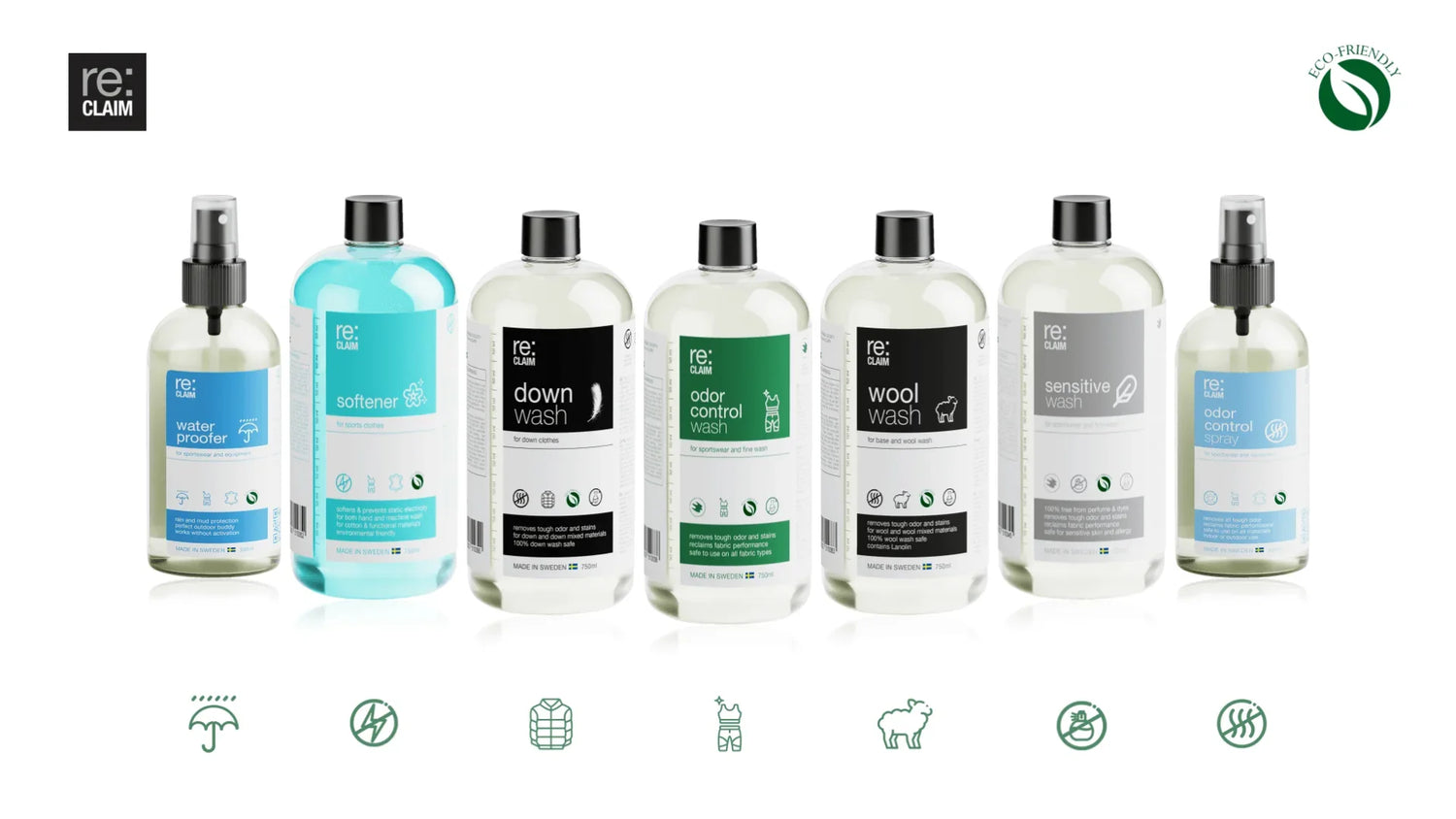
Yes. Cleaning does not depend on enzymes alone. Surfactants help water lift oils and soil from fabrics; the performance comes from the complete formulation. Re:claim Wool Wash is developed to remove dirt and unwanted odours without added enzymes. It also contains lanolin for wool care.
When should you choose a wool detergent?
When a garment calls for wool washing, when caring for machine-washable merino, or when cleaning a favourite wool knit, a purpose-made detergent is a considered choice. Dose carefully as well: more product does not automatically mean better cleaning, and thick knits can hold onto residues.
One habit worth keeping
Keep your wool detergent where you can see it. It sounds simple, but laundry mishaps often happen when you are in a rush. Having the right bottle close by makes it easier to treat a favourite piece gently.