

Wool detergent with lanolin – a practical care guide
Some clothes slip quietly to the back of the wardrobe. Others become part of everyday life: the wool jumper you reach for on cold mornings, the merino base layer you pack for a trip, or the cardigan you always take along just in case. Those pieces deserve a little care. Not because washing wool has to be complicated, but because small habits can make a difference over time.
The first thing to remember is that wool is not cotton. It is a protein fibre with an impressive ability to manage moisture and often stay fresh between wears. It does not necessarily need washing after every outing.
Why choose a detergent made for wool?
Wool fibres have a scaly surface. With moisture and vigorous movement, fibres can catch against one another, causing felting and shrinkage. A gentle wash cycle and careful handling matter every bit as much as the detergent.
The cleaning formula matters too. Some everyday detergents contain proteases, enzymes designed to break down protein. Wool itself is made of protein, so a wool-specific detergent without these enzymes is a sensible choice. Look for a gentle formulation and always follow the garment care label.

Lanolin: a thoughtful extra
Lanolin is a waxy substance naturally found in sheep’s fleece. Much of it is removed as wool is processed into yarn and fabric. Added to a wool detergent, lanolin can help replenish some of that conditioning feel. Think of it as care, not a miracle cure: it cannot repair a damaged fibre or reverse severe felting.
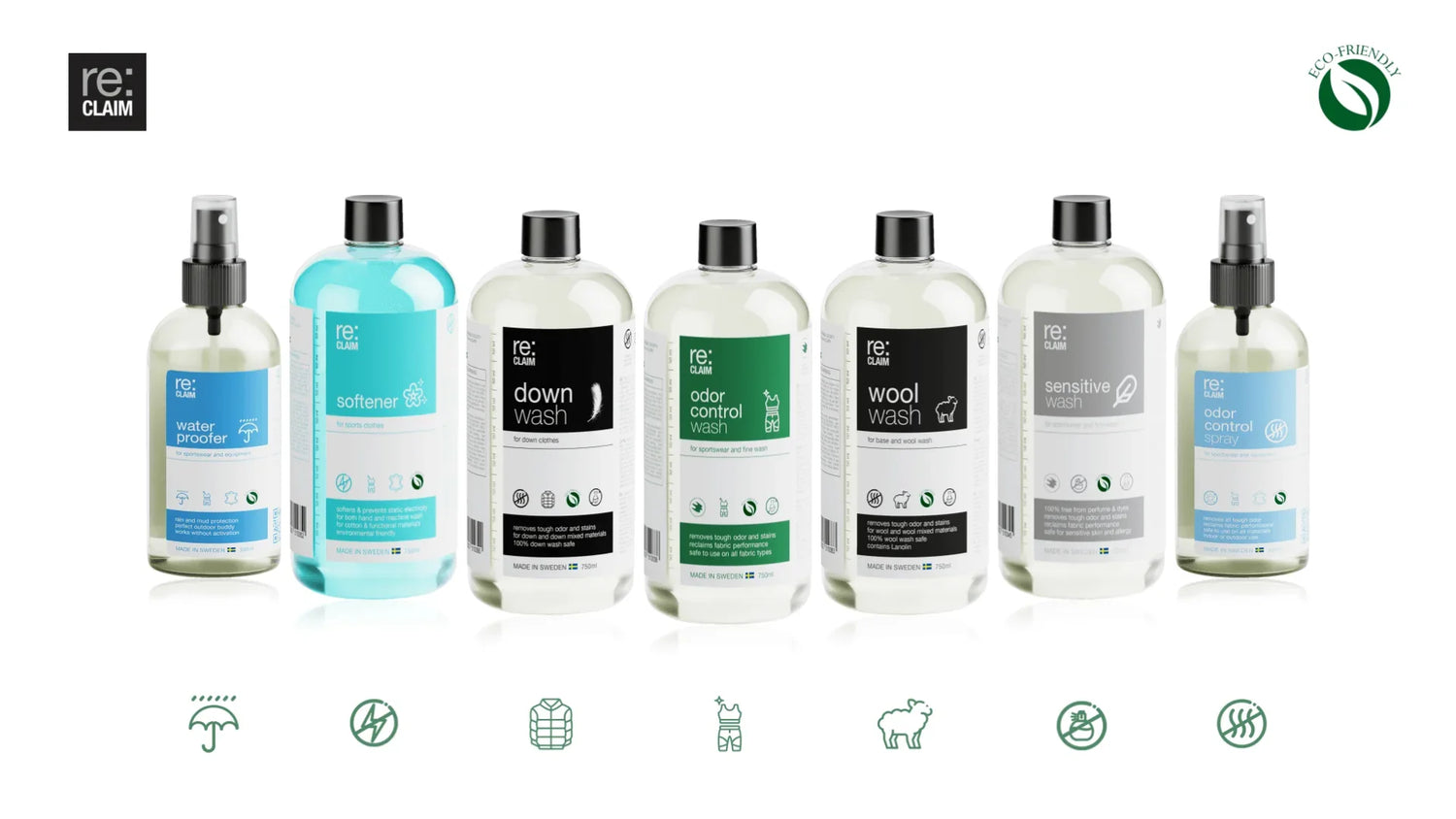
That is why we include lanolin in Re:claim Wool Wash. We wanted wool detergent to do more than simply clean.
What about stubborn odours?
Wool is naturally resistant to developing odours, but even the best merino base layer needs washing eventually. A jumper stored away for months can need freshening up, too. Covering a smell with fragrance is not the same as removing what caused it. Re:claim Wool Wash is designed to clean and help remove unwanted odours while remaining enzyme-free and providing lanolin care. Three considered qualities in one bottle.
How to wash wool, simply
Start by airing the garment. If it still feels clean, that may be enough. When it does need washing, check the care label, turn it inside out and choose the appropriate wool cycle or hand wash. Many machine-washable wool garments allow 30°C, but the label always comes first. Dose as instructed, avoid rubbing or wringing, and gently reshape knits while damp. Dry flat on a towel.
Wool does not benefit from unnecessary washing. Often the kindest approach is to wash less frequently, and more carefully.
A bottle that goes a long way
Re:claim Wool Wash comes in a 750 ml bottle, with a stated capacity of up to 75 kg of wool laundry. The number of loads depends on how much you put in each wash and the recommended dose. It is more useful to describe capacity by laundry weight than to promise the same number of cycles for every household.
Our favourite clothes are meant to be worn, not saved for some distant special occasion. Looking after them helps keep them in rotation.
Quick questions
Can wool be washed at 30°C? Yes, when the care label permits it and you use a gentle cycle.
Should you wash wool after every wear? Often not. Try airing first.
Is enzyme-free detergent best for every fabric? Not necessarily; the important thing is matching the formulation to the textile.
Can lanolin undo shrinkage? No, not once wool has severely felted.